
A PTR study of medium-voltage overhead switches across 20 countries found that utilities buy reclosers to meet reliability pressure, not for new technology’s sake, and that winning their business takes more than a good product. PTR analyst Marzia Batool explains.
Most people have never heard of a recloser. Yet this small device helps decide how quickly their lights come back on after a storm.
A global grid equipment manufacturer asked PTR to study the market for medium-voltage overhead switches, specifically reclosers and lateral fault interrupters. The study covered 20 countries across the Americas, Asia Pacific, Europe, and the Middle East and Africa. The client wanted to know more than the size of the market. It wanted to know where the market is growing, why and how utilities buy these devices, who they buy from, and what it would take to win more of that business over the next decade. This article focuses on reclosers.
What a recloser does
“A recloser is essentially a small circuit breaker sitting on an electricity pole,” Batool explains.
Most faults on overhead lines are temporary: a tree branch brushes a wire, or lightning strikes nearby. With an old-fashioned fuse, the fuse simply blows, and a whole neighborhood stays in the dark until a crew drives out to fix it. A recloser instead cuts the power for a moment, waits, and tries again. If the fault has cleared, the lights come back within seconds, and nobody needs to leave the depot.
Lateral fault interrupters do a similar job on the smaller side branches of the network, where a full recloser would be too expensive.
How the study was built
The team started with the network itself. For each country, it looked at how much of the medium-voltage grid runs overhead, which voltage levels dominate, and how many main feeders, branches, and sub-branches there are. This showed where these devices can physically go and how much room there is to add more.
The team then examined what drives utilities to invest in each market:
- Are regulators penalizing utilities for long or frequent outages?
- Is there a national grid modernization program with money behind it?
- Is older equipment reaching the end of its life?
It also studied how utilities actually buy. Do they run open tenders, use framework agreements, or rely on approved vendor lists? What matters most when they choose: price, technical specifications, or a supplier’s track record? Who are the main players in each country, and why do they lead? How long does delivery take, and how important is local service?
Finally, the team compared the client’s products feature by feature against the main competitors. It also built a view of what these devices really cost over their whole life, including installation, communication, maintenance, and replacement parts. Everything was then brought together into a market forecast.
The market runs on one word: reliability
The first thing that stood out was the importance of reliability. In country after country, utilities do not buy reclosers mainly for new technology’s sake. They buy them because of the pressure to keep the lights on.
Many regulators now track how often customers lose power and for how long, and in several markets utilities are penalized when those numbers are bad. “That turns a small device on a pole into a very direct way of protecting revenue and reputation,” Batool says.
It’s still an overhead world
Globally, most of the medium-voltage grid still hangs on poles. This is especially true across much of Latin America, Asia, and Africa, where lines stretch across long rural distances. These lines are exposed to storms, monsoons, vegetation, lightning, and pollution.
Even countries that are slowly moving cables underground still have a huge legacy of overhead lines that will remain in place for decades. Wherever lines are long, exposed, and radial, reclosers make sense.
Grids are being modernized, but selectively
Many countries have national programs to upgrade their distribution networks, sometimes backed by public budgets, development banks, or regulated tariffs. Older oil-filled and mechanical devices are being replaced with modern vacuum, electronically controlled units. At the same time, more renewable and distributed generation is making the grid more complex, which gives utilities another reason to install modern switches.
Utilities are not automating everything, however. “The idea of a fully self-healing grid is attractive,” Batool says, “but in practice, utilities automate selectively.” They start with critical feeders, the points where networks connect, and the sections that fault most often. They add communication and remote control where it clearly pays off and keep simpler, self-powered devices on remote rural lines. This selective approach shapes the whole market. Growth is targeted rather than one big wave.
A steady, essential product
Reclosers make up the bulk of overhead switch demand today, both in units sold and in value. Their growth is steady, and Batool sees that as a good sign: “It tells you this is a mature, essential product that utilities keep buying year after year, whether to extend automation to more feeders or to replace aging devices.”
The regional picture varies:
- The Americas is the largest market in both volume and value.
- Asia Pacific buys a lot of units, but at lower prices, as many of its markets are very cost-sensitive.
- The Middle East and Africa buys fewer units but tends to choose higher-specification equipment.
- Europe is smaller, but it is the most advanced in using lateral devices alongside reclosers.
The recloser is getting smarter
A modern recloser is no longer just a switch. More and more of its value sits in the controller, communications, software, and battery. Utilities want reclosers that can talk to their control centers using standard protocols.
This has big consequences for lifetime cost. The switch itself can last for decades, but the electronics around it need refreshing much sooner. As a result, utilities weigh carefully where advanced features are worth paying for.
How utilities buy, and why execution matters
Qualification comes before price. A supplier usually has to pass technical approvals, and often a pilot, before it reaches a utility’s approved list. Only then does price become the deciding factor.
The study also found a clear move away from one-off tenders toward phased, repeatable programs and framework agreements. Reclosers are increasingly bought as part of a package that includes controls, communications, and integration.
This leads to one of the study’s most important findings: in this market, execution matters as much as the product. Delivery lead times, spare parts, local service teams, training for utility crews, and fast response in the field came up again and again as reasons utilities choose one supplier over another.
Market leadership is local
The same handful of global names appears across many countries, but who leads depends on the country. In some markets, an established OEM dominates thanks to its installed base and long-standing relationships. In others, a regional player wins on price or local assembly. Low-cost challengers are testing price-sensitive markets, while buyers in other markets remain focused on specification and track record.
The bottom line
The recloser market is not a story of disruption. It is steady, reliability-driven, and local. Suppliers that want to grow need more than a competitive device. They need to get qualified early, offer a complete package of hardware, controls, and integration, and back it with dependable delivery, spare parts, and local service.
About the analyst: Marzia Batool is an analyst at Power Technology Research (PTR).
Medium Voltage Switchgear Service Overview
The research presented in this article is from PTR's Medium Voltage Switchgear market research. For information about this service please submit a request shown below.
Europe: +49-89-12250950
Americas: +1 408-604-0522
Japan: +81-80-7808-1378
GCC/Rest of APAC: +971-58-1602441
More About our: Medium Voltage Switchgear Market Analysis
Recent Insights

Data Centers, Grid Spending and SF6 Bans Are Reshaping the US Medium-Voltage Switchgear Market
Medium-voltage switchgear rarely makes headlines, but it sits at the center of almost every major trend in the US power sector. Manufacturing construction, data center growth, renewable energy and storage, and a federal and state push to modernize the grid are all...
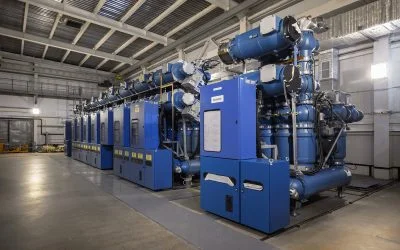
SF₆-Free MV Switchgear: California and New York Have Set the Clock
For decades, SF₆ has been the default insulating gas in medium voltage GIS. In two of the largest US states, that era now has an end date. Sulfur hexafluoride (SF₆) is an exceptionally effective insulating gas, and one of the most potent greenhouse gases known. State...
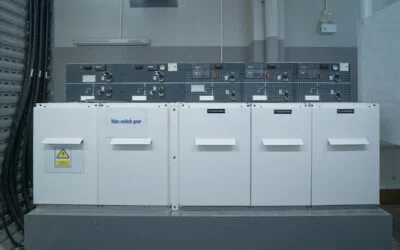
Data Centers Are the Fastest-Growing Market for US Medium Voltage Switchgear
Utilities still buy most of the US medium voltage switchgear market. But no customer group is growing faster than data centers, and they are changing what kind of switchgear gets bought. The US medium voltage (MV) switchgear market is worth about $4.9 billion in...
Data Centers, Grid Spending and SF6 Bans Are Reshaping the US Medium-Voltage Switchgear Market
Medium-voltage switchgear rarely makes headlines, but it sits at the center of almost every major trend in the US power sector. Manufacturing construction, data center growth, renewable energy and storage, and a federal and state push to modernize the grid are all...
SF₆-Free MV Switchgear: California and New York Have Set the Clock
For decades, SF₆ has been the default insulating gas in medium voltage GIS. In two of the largest US states, that era now has an end date. Sulfur hexafluoride (SF₆) is an exceptionally effective insulating gas, and one of the most potent greenhouse gases known. State...
Data Centers Are the Fastest-Growing Market for US Medium Voltage Switchgear
Utilities still buy most of the US medium voltage switchgear market. But no customer group is growing faster than data centers, and they are changing what kind of switchgear gets bought. The US medium voltage (MV) switchgear market is worth about $4.9 billion in...
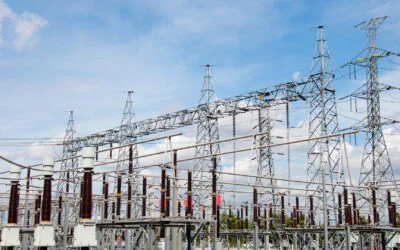
Wildfire Risk Is Changing How Western US Utilities Switch Their Feeders
When a spark can start a wildfire, the way a utility opens and closes a circuit becomes a safety decision. In the West, that is reshaping the equipment on overhead feeders. Across California, Oregon, Colorado and other fire-prone states, utilities have launched...